During its service in WWII, the USS New Orleans was hit by a Japanese torpedo, snapping the front third of the ship off, and it’s finally been found more than 80 years later.
The USS New Orleans, during its service in the Battle of Tassafarnoga, was hit by a Japanese ‘Long Lance’ torpedo. The explosive hit its intended target, but due to some miraculous engineering and quick thinking by the crew, the WWII ship didn’t sink.
The attack killed 182 crew members and sank the bow in the Solomon Islands’ Iron Bottom Sound. However, the remaining crew hobbled the ship to a nearby harbor. Strapped for materials, they made repairs with logs and coconuts.
Minus almost 200 crew and the front third of their Second World War ship, they sailed it back to Australia. However, until now, the bow of the USS New Orleans WWII ship has been sitting at the bottom of the sea, forgotten, until it was recently found by an unmanned vehicle.
Exiting Discovery For Underwater Researchers
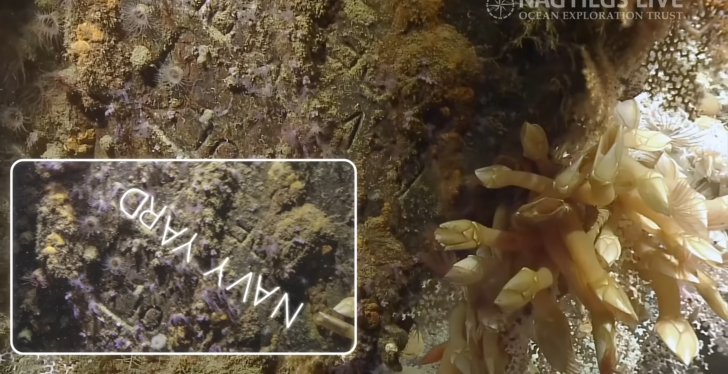
The 150-foot section of the ship was found sitting 2,214 feet underwater at the Solomon Islands’ Iron Bottom Sound. Researchers came across the rotting hull during a routine underwater mapping operation. The barnacle-encrusted slab of metal was then investigated.
The ship was positively identified by a few paint fragments and the engraved anchor. The discovery was shared with a large group of researchers as they livestreamed the finding. “This imagery was viewed in real-time by hundreds of experts around the world, who all worked together to make a positive identification of the findings,” Daniel Wagner of the Ocean Exploration Trust said.
For more than 80 years, the bow of the USS New Orleans WWII ship sat at the bottom of the ocean until it was found by chance. Really, seeing the damage done to the original warship, the whole thing should be there. But, it was by some kind of miracle that they managed to get as much back as they did.
After losing the bow, the ship had some repairs done in Australian harbors. However, it eventually made it back to the US, sailing backward the entire time. Here, it was completely overhauled and continued to be in service for many years.