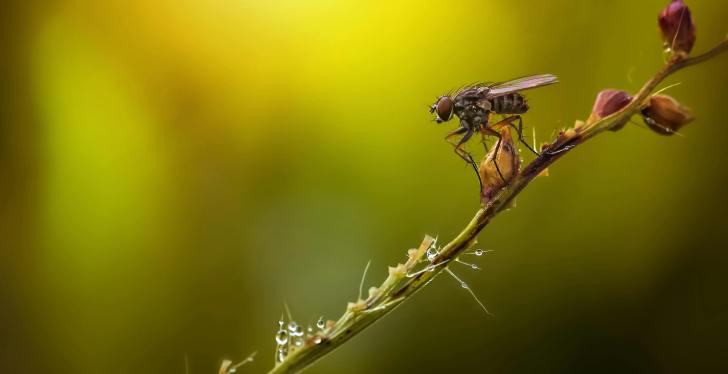
Healthcare for all? Impossible. The release of the Epstein files? Not ever. One million flies? Oh, hell yeah, the government of America can handle that.
In actual fact, the release of millions of flies over America may end up saving the country’s livestock, as well as pets, and even humans. So, it’s not as hare-brained as it may seem.
At present, Central America and Mexico are suffering from a plague of New World Screwworm maggots. These disgusting larvae burrow into the flesh of wildlife and eat it alive. They are a threat to the livestock industry, wildlife, pets, and even humans.
According to Dr. Michael Bailey, president-elect of the American Veterinary Medical Association, they can kill a 1,000-pound cow in a week. A huge portion of the US economy rests on the back of livestock. A plague of flesh-eating fly larvae would be devastating to an economy already on its knees.
The larvae and flies are moving north through Central America and Mexico. No wall is stopping them.
Millions Of Flies Seems Like Only Solution for America
The United States Department of Agriculture outlined its plan to stop the infestation of the flesh-eating larvae. An $8.5 million fly dispersal facility is going to be built in Texas. Mexico will spearhead the breeding program with a $21 million fly breeding program to supply America. They will collaborate with the fly breeding program already in action in Panama that produces 100 million flies a week.
The flies produced will be the adult version of the New World Screwworm larvae. However, they will all be sterile males. These flies will be released over America, including Mexico and Central America. The radioactively sterilized flies will mate with females, essentially wasting their eggs.
Furthermore, flies bred in Mexico are given a rigorous regime of gym workouts and training by established dating experts. As a result, only the sexiest flies will be dropped over America.
Hopefully, this will drastically reduce the number of flies that are born across the continent. Because the flesh-eating larvae will not be born, the damage to livestock will be reduced.
However, this infestation isn’t the first of its kind. The USDA has fought them off before. They are confident that they will be able to do it again.